
SkinScope
A digital solution to simplify skincare routines and enhances users' understanding of skincare formulas
The demand for skincare has witnessed a remarkable surge in recent years with a total revenue of US$153.30 billion in 2022.
A surge driven by a growing emphasis on self-care and well being, more people than ever are recognising the importance of maintaining healthy skin.
The widespread availability of information and the influence of social media have also played significant roles in fuelling the trend
My Role
UX/UI Designer
This was a solo personal design project, where I was able to explore a problem I feel passionate about. I was required to leave behind all biases, listen to the problem, and take the lead confidently.
Timeline
8 weeks
Platform
Mobile Application
Tasks
Research, User Flow & Wireframing,
Prototyping, User Testing, Design
The Problem
Despite the advantages brought by the internet and technology, people are now facing information overload due to the immense volume of content generated on social media platforms. The abundance of options, vast array of ingredients and marketing tactics can be intimidating and overpowering.
People can find themselves lost when grappling with comprehending the benefits offered by each product and determining if it is suitable for their unique skin type, tone, or concerns, making the task of finding suitable products seem overwhelming. This process can consume a significant amount of time, lead to frustration, and ultimately result in a less than gratifying shopping experience.
So, why should we care, and why is so much time, energy and money into skincare?
Most of us can relate to having a ‘bad skin day’ and for some, skin conditions and concerns can be severe, unpredictable and have a devastating impact on their mental health. Acne, rosacea and psoriasis are a few examples of the many skin disorders that have been associated with increased rates of depression, anxiety and a reduced quality of life.
In a survey carried out by Mederma in 2021;
It is evident that for a lot of people, access to safe and effective skincare is vital but without a chemist’s degree it seems unattainable to navigate ingredients labels and sustain a successful skincare regimen.
of those surveyed say they need clarification on some scientific terms and technological
developments in the beauty business.
72%
buy products containing ingredients they don't understand if they trust the brand selling the product.
50%
of people said they've experienced social anxiety in the past due to bad skin
58%
said they would skip events altogether instead of going through the hassle of dealing with skin issues and insecurities
61%
Defining the problem
Drawing from these insights, my objective was to clearly define the problem to be addressed through this design process to ensure the end product would be precisely targeted to meet the users needs.
The statement would act as a guide for me, allowing me to evaluate my design choices against the defined problem. By stating the problem, I want to prevent any of my own assumptions or biases interfering, instead making choices based off of data-driven analysis and research. This would prevent wasting any efforts or time on solutions that don’t address the actual problem;
“This product is intended to help people concerned about skin health to build and maintain a safe and effective skincare routine.
We have reason to believe that existing products have too many recommendations, often focused on specific brand advertisements which aren’t necessarily the best option for their skin, causing them to make decisions without being fully aware of the ingredients and how they might impact their skin. This often leads to impulse buying which may result in harmful reactions such as breakouts, irritation and allergic reactions.
How might we create a product so that our customers can keep track of the ingredients and routine, make more informed decisions and move towards a better understanding of their skin. “
User Research
Preparing for User Interviews
To confirm and further define my problem, my assumptions based on the initial research needed to be challenged. I would need to understand my user by finding out what their motivations, behaviours and frustrations are.
Ultimately, the goal of the interviews was to learn the influencing factors of peoples’ current routine and purchasing habits and determine the level of knowledge people currently have around skincare products and caring for their skin.
Defining this goal prior to creating an interview guide allowed me to refine my thinking. Instead of simply thinking of what questions I could ask someone about skincare (which could lead to a never ending conversation), I could narrow down the questions to ones that had potential to provide genuinely valuable insights. These questions fit into four groups - routine, skin type/concerns, purchasing habits and goals so four main questions were defined and phrased in a way that could lead to expansive answers and create a natural flow of conversation. Of course, these questions would just scratch the surface so I was prepared with a further 21 follow up questions leading off those topics.
-
When was the last time you introduced a new skincare product into your routine? (What was your experience with it?)
-
How well do you understand the ingredients in skincare products?
-
How do you usually find information about the different ingredients and their benefits?
-
Do you use skin care reactively (in response to a breakout or problem ) or proactively (preventative measure, maintenance etc)?
User interviews
Reaching out to people in order to find participants for the interviews, I found that people were eager to get involved and help with the research. Through Zoom, 5 interviews were conducted with females ranging from age 26 to 35.
The first interview kicked off with a strong start and provided some really in depth insights with little prompting. Not all of the interviews followed the same pattern and needed a bit more inquiry, or simply just didn’t have any experience with what I was asking about. This was of course expected but overall I was pleasantly surprised by how open and expansive some of the answers were. When talking about skin concerns and insecurities, I was dealing with a pretty sensitive topic so I was cautious of asking anything that may be potentially triggering or too personal and reminded participants that they are in a safe space. Nonetheless, participants were more than happy to share their journey with me.
Interview Analysis
All interviews were recorded on Zoom and later transcribed with Otter ai. Any points that felt out of context or when I needed to gauge more from the tone, I was still able to refer back to the recorded interview for and the transcribe allowed me to analyse the interviews much more efficiently.
The goal was to find patterns that would provide me with high level insights. Initially, finding these patterns seemed like a daunting task as I had a huge amount of information which would essentially frame my solution. So I used the most effective method for me so far during this process; just getting stuck in and refine later. The key points had been adapted to sticky notes in Figma which I would group together when noticing any similarities and gradually the patterns started to emerge. The initial affinity map was then reevaluated, determining any further or more beneficial patterns so I could analyse the results in the most optimal way.
For instance, a significant portion of the focal points revolved around participants' comprehension of skincare. To organise these insights effectively, I grouped them together while also breaking them down into subcategories, such as disregarded ingredients and the perplexity surrounding skincare. This approach enabled me to pinpoint the actual problem areas and filter out aspects that required less attention.

Insights
When I initially defined the problem, an assumption I made was that skincare consumers were heavily swayed by brand advertisements. However, I discovered that this assumption was entirely off the mark. In fact, most individuals expressed a stronger preference for recommendations they received from friends, family, and online communities over those from social media influencers and skincare brands. One participant, referencing a Reddit community, remarked "It was just people giving each other advice, which I liked more than a company trying to give me advice." Another participant even expressed scepticism towards online recommendations, noting that promotional incentives often undermined their trust in such endorsements.
A recurring issue surfaced where individuals encountered adverse reactions to their skincare products. Every participant reported experiencing some form of reaction when trying out new products, including symptoms like dryness, irritation, and even burning sensations
All participants expressed feeling overwhelmed by skincare ingredients, yet they actively sought out products containing specific ingredients known to work well with their skin. One participant mentioned, "My skin reacts really well to niacinamide, so I'll choose products that include it."
While my initial assumption was validated, it became apparent that individuals were primarily aware of the benefits associated with specific ingredients, likely influenced by product labelling and marketing. The challenge lay in comprehending the remaining ingredients. Less attention was given to the complete list of ingredients typically found on the back of a product bottle, where potentially harmful substances like parabens and sulphates are usually listed. Participants exhibited limited understanding of these ingredients and their potential effects.
Other valuable insights found were;
Going forward there were things I needed to consider. Foremost, I had to let go of the assumption that individuals were heavily influenced by brand advertisements. The assumption that people were facing challenges understanding skincare ingredients had been validated. This reinforced the need to prioritise this when determining a solution and I would need to bear in mind that people are aiming to move toward a more basic, reliable routine.
With the new findings, the problem was redefined as;
“The objective of this product is to equip users with the knowledge and tools to establish and maintain a safe and effective skincare routine.
There is reason to believe that existing products are failing to address the problem surrounding confusing skincare, leading to consumers making purchases without being fully informed of the ingredients and their potentially bad or harmful ingredients.
How can we make it easier to digest the vast amount of information and create a product that would help our customers make more informed decisions with the aim to improve their relationship with their skin and skincare routine“
4 out of 5 participants said they suffered from hormonal acne
3 out of 5 participants had experience their skin type and/or concerns changing unexpectedly
Participants expressed a desire to transition towards a skincare routine that is both consistent and uncomplicated
4 out of 5 participants have had their mental health impacted by their skin and all 5 mentioned feeling more confident with clearer skin
User Persona
Having gathered the information from affinity mapping, I created a persona to encapsulate the insights that embody the target audience, allowing me to empathise with the users I aim to assist. This persona served as a valuable reference throughout the project, helping me stay attuned to the mindset of the participants I interviewed and steering design choices and priorities to cultivate a user-centric experience.
Having identified a pattern in people's routines, a foundation was already laid for constructing the persona. Starting with an assessment of what I already knew about the user, I proceeded to determine their goals and needs, as well as the obstacles hindering their progress toward those goals. Additionally, I examined the actions they took as a response to these challenges.

Amelia | Female | 29
-
Full-time professional
-
Her work requires her to travel often
-
Gym enthusiast and loves outdoor activities
-
A hectic schedule leads to a high amount of UV exposure
-
On a self-care & skincare journey
01
ABOUT
-
Doesn’t have a great understanding of bad/harmful ingredients in skincare
-
Consumes information about skincare online and through social media
-
Suffers from hormonal acne
-
Has frequently changed their routine and products
-
Makes skincare purchases based off of other people experiences and reviews.
-
Skin type and concerns have recently changed
-
Has experienced negative reactions to skincare
02
GOALS & NEEDS
-
Achieve and maintain clear and healthy skin
-
To prevent skin ageing
-
To feel confident with their skin
-
To have and maintain a simple and consistent skincare routine
-
Easily accessible information on the ingredients in skincare
-
A better understanding of the bad/harmful ingredients and the full list of ingredients in a product formula.
03
PAINPOINTS
-
Harmful ingredients like parabens are usually listed on the back of the bottle, which they usually don’t see or understand
-
Previously had a good understanding of their skin type but has changed, making it harder to care for their skin.
-
Skin goes through regular changes due to hormones & weather and has to use products to that target those concerns
-
Having reactions to the products like irritation and breakouts
-
An overwhelming amount of information, making it hard to understand what suits their skin, and how to work it into a routine
04
BEHAVIOUR
-
Uses harsh products in response to breakouts which can often result in irritation or dry skin
-
Spends a lot of time looking for specific, beneficial ingredients and ignoring the other ingredients, which may not work for their skin
-
Tries a lot of different products that they can’t always continue to use
-
Switches out products because they don’t work for their skin or can’t use them with other products they’re using at the time
The Solution
Having identified a clear problem and established the goals and needs of the user, the next step was to navigate towards a solution.
Initially, the ‘crazy 8's’ exercise, which involved generating 8 ideas in 8 minutes, appeared somewhat unsuccessful as only 3 ideas were generated. However, the exercise served as the catalyst to stimulate the flow of ideas, precisely what was needed at that stage.
Although it served as a positive starting point, I felt that none of the ideas had the capacity to fully solve the problem. It became apparent that an app would be the most suitable solution however I recognised the existence of numerous skincare apps already offering similar solutions. Through competitor analysis, I had tested and personally used several of these apps in the past. Therefore it was crucial to determine how this app would differentiate itself from others on the market and more importantly, identify the areas where existing apps fell short in resolving the problem.
I reached the conclusion that the existing products were only addressing a part of the problem. Most of the available apps are either focused on providing skincare information or assisting users in tracking and building their skincare routines. However, what users truly need is a comprehensive solution that not only enhances their understanding of their skin but also provides valuable insights into the ingredients they use. It is essential for users to know how these ingredients will affect their skin and be aware of any potential triggers caused by the products they incorporate into their routines in order to solve this problem.
To accomplish this, all three ideas generated during the crazy 8's exercise would be integrated. The solution would involve developing an app that tracks users' progress and identifies triggers affecting their skin over time. Simultaneously, the app would provide users with digestible information about their skincare products and how they work for their skin, facilitating a more informed approach to skincare.
Skincare barcode scanner
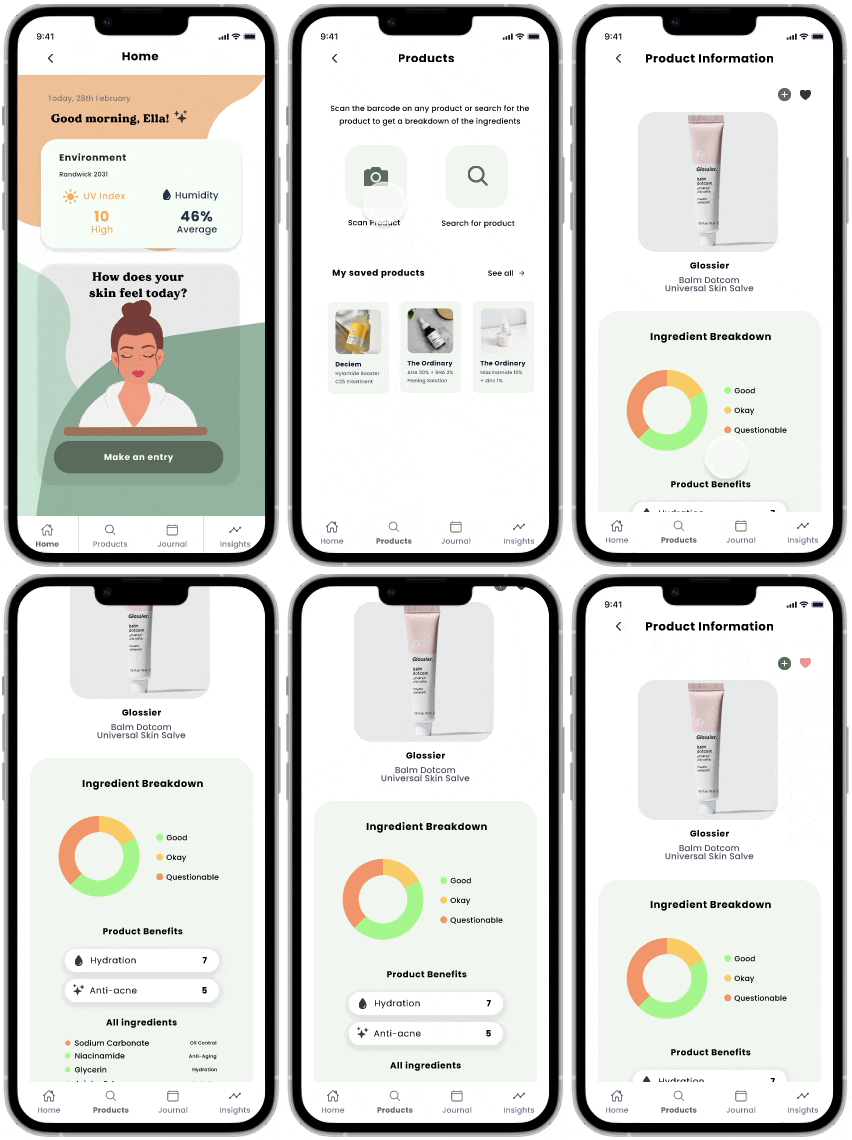
An app which allows the user to scan the barcode of their skincare products using their camera and find an informative breakdown of the list of ingredients in the product.
Skincare diary
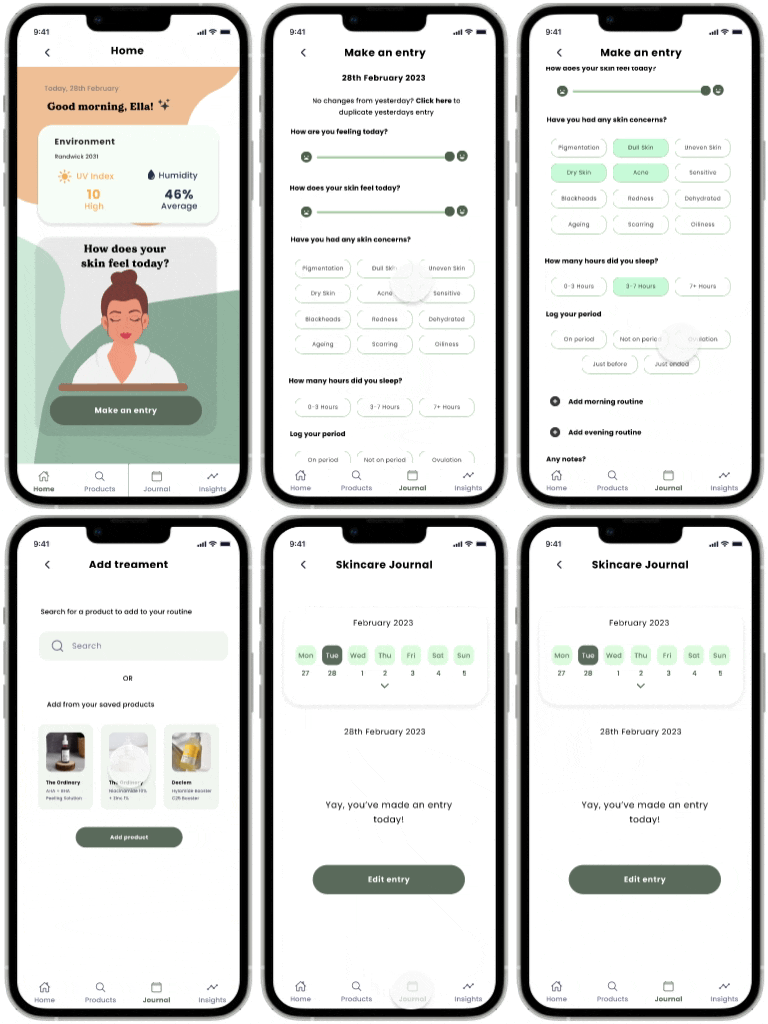
A space for users to digitally record their skincare routine and track any changes, providing the user an insight into any potential causes of their skin concerns.
Skincare focused period tracker
Where users could track their skin along with other symptoms throughout their cycle, designed to help users better understand the effects of hormones on the skin and how best to manage it.
Initial User Flow
I began to think of what this app might look like and what would be the journey for the user. The initial flow was a rough draft, to be reviewed later but allowed me to think about what paths would be taken by the user in order to reach the goal of the app.

MVP Mapping
At a first glance, the app looked quite complex for a version one product. I was also noting that in order for the app to be effective, it would need to be used every day where possible so I was mindful of keeping it as simple for the user as I could. With the goal of streamlining the app and delivering an effective yet achievable product within the given timeframe, I devised an MVP (Minimum Viable Product) map.
The map took into account both the value each feature would provide and the complexity involved in their development. Consequently, I could identify the most optimal features while eliminating those that might not be as beneficial for the target audience.
.png)
Initial MVP Map
.png)
Refined MVP Map
Features that would be included after reviewing the MVP map;
01 | Barcode Scanner with Ingredient Breakdown
To address the prevalent issue of confusing skincare ingredients, this feature aims to provide a detailed and easily understandable breakdown of the ingredients. By incorporating a barcode scanner, users can easily locate their products within the app by simply scanning the product's barcode using their camera.
02 | Insights Graph for Progress Tracking
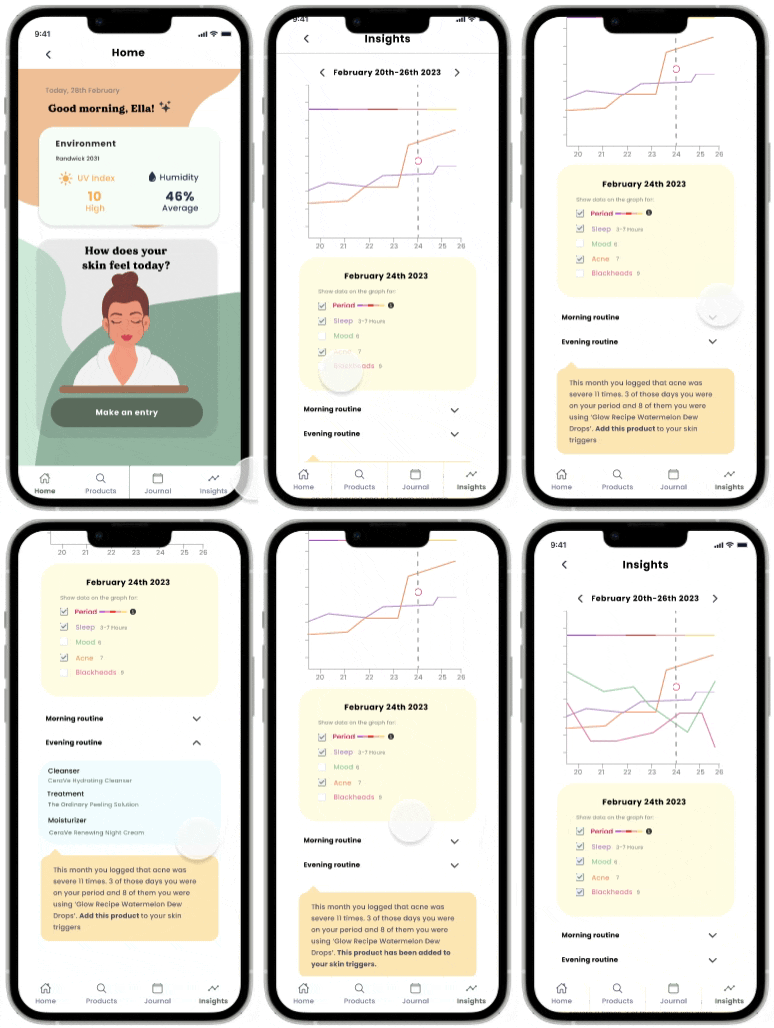
The insights graph allows users to monitor their skin's progress over time, enabling them to identify any changes or improvements they have observed. Users can consistently utilise the skin journal, logging their skin concerns and their severity for the graph to display personalised weekly, monthly, or yearly statistics. By visually representing their logs, users can pinpoint the periods when their skin was most problematic and correlate them with other factors logged during those times.
03 | Identifying skin triggers
Building upon the insights graph, this feature serves as a valuable tool to recognise potential triggers by detecting patterns between skin concerns and other influencing factors, such as products used, menstrual cycle, mood, and more. This understanding will help users stick to a simpler and more effective skincare routine, as they can plan and adjust their regimen based on identified triggers, avoiding the trial and error of using products that may not be suitable for their skin.
Refinements
With the optimal features now defined, I amended the user flow accordingly.
The initial draft included features such as an expiry date tracker and a photo diary, but further evaluation revealed that these features held limited value for the MVP. Although they might prove worthwhile for a future iteration with additional research, I did not feel they would effectively address the users goals and needs.
Additionally, I had to make the difficult decision of excluding the period tracking feature. During the initial ideation phase, I was enthusiastic about incorporating it due to hormonal acne being a significant pain point. However, it became evident that the feature was complex and did not offer as much overall value since not every user would encounter this specific problem. Instead, I introduced the option for users to log their menstrual cycle as part of a journal entry, alongside other potential triggering factors, so it can still be considered as a potential influence on their skin concerns.

Wireframing
Starting with some rough, hand-drawn sketches, I put together wireframes of each screen. This way I could quickly map out each stage of the app and figure out how it would make sense to the user, without worrying about the smaller details.
I would ask myself questions like; Do these features belong on the same screen? What journey would I expect the user to take? How are other well designed apps arranging the features?
It was at this stage where I noticed a potential pain point in one of the features, the barcode scanner. Whilst carrying out competitor analysis I discovered another app offering the same feature and found I was unable to scan most of my skincare products due to them not having a barcode on the packaging. To combat this, the feature would instead scan the front of the packaging, identifying the product by its name.
With a basic template now laid out, I moved to Figma to create low-fidelity wireframes. I knew that the whole process would be time consuming and I would inevitably need to make changes along the way so again I kept the first draft rough, focusing on getting the key features built and a basic structure that I could build on. The functionality of the app was my main focus so the visual design was not a priority, however I still aimed for it to be coherent and visually pleasing for the user so I devised a colour scheme that could be applied throughout.
I structured the interactions and built a prototype so I could start personally testing the interactive experience. Again, as I went though I would question; Is this information easy to find? Is it clear where to go next? Is that what I would expect to happen?


User Testing
Once I was happy with the flow I moved onto user testing in order to ensure it is easy to navigate, see if there are any potential gaps most importantly if it is solving the problem.
When generating the user testing guide I kept in mind that the participants would need to be able to navigate the app themselves without any interference from myself so I would ask them to complete tasks like creating a journal entry, finding product information or checking information from past journal entries.
The initial feedback was promising, as expected some issues arose however all users loved the idea for the app and found it easy to navigate.
Iterations & Design Refinement
To evaluate the feedback received from testing, I utilised Figma to create sticky notes capturing both positive and negative comments or issues raised by the participants. I placed these sticky notes adjacent to the corresponding pages in a copy of the wireframes. This approach allowed me to identify any correlations among different participants' feedback and pinpoint areas that required greater attention or could remain unchanged based on the input.
Participants were impressed by the product scanning feature and wanted to know if there was anything like this on the market. This was great to hear as it reiterated that the previous change I made to this feature had paid off. There was also some great feedback on the landing page and general layout of the app. I had kept the landing page relatively simple and all participants took to it really well so I decided to not make any further changes.
Some issues arose where interactions weren’t working and clickable items weren’t responding correctly. These were luckily easily fixed by editing the connections on Figma but proved the importance of user testing as it was something I hadn’t noticed through my own testing.
One user noted that they can sometimes be put off using productivity apps like this as they find them time consuming and suggested having the option to duplicate the previous day's entry. As I knew from my initial research, people can often stick to the same routine so I felt this would be worth implementing. This option would allow users to duplicate and save the previous days entry or duplicate and edit the entry.
Whilst most participants found the Insights Graph easy to understand, one person mentioned that the line for the hormone cycle didn’t make sense to them. so I thought about how this could be better represented. I cleared this up by including a colour coded line, accompanied by an information button that showed what stage of the cycle each colour represents. By implementing this, the rest of the graph remained unchanged as it had received positive feedback from other participants.
.png)
.png)

The Final Design
Conclusion
In conclusion, the development of SkinScope has been a remarkable journey and I have achieved a goal in creating a user-centric and effective digital solution for skincare enthusiasts.
Being my first time leading a project, I quickly learned to trust the UX process. As someone who has suffered from skin concerns for a long time, I could be considered as a real-end user and while my prior experience and assumptions were a driving force for the project, I recognised the importance of validating those concepts through thorough user research and testing. This underscored the importance of putting the user at the centre of the design journey and ensuring that the final product catered to their genuine needs.